BlockViz
WikiStrategies & TradingStop Loss Hunting / Volatility Stops

Stop Loss Hunting / Volatility Stops

Category: Strategies & Trading

Many traders feel like they are constantly getting “stop-loss hunted.”

Price dips just far enough to hit their stop — then reverses.

While this experience is common, it is usually not the result of malicious targeting. It is a structural consequence of volatility, liquidity, and crowd behavior.

This article explains what stop-loss hunting really is, why it happens, and how to interpret it correctly.

What “stop loss hunting” usually means

In practice, “stop loss hunting” refers to:

  • price briefly moving beyond obvious levels
  • triggering clustered stop orders
  • then reversing direction

What it does not usually mean:

  • someone is watching your individual stop
  • a single actor is deliberately targeting retail traders

Stops are hit because they are predictable, not because they are personal.

Why stops cluster

Stop losses tend to cluster around:

  • recent highs and lows
  • round numbers
  • obvious support and resistance levels
  • common indicator levels

When many participants place stops in the same area, those levels become liquidity pockets.

Liquidity, not malice

Markets move toward liquidity.

When price approaches a stop cluster:

  • stop orders become market orders
  • liquidity temporarily increases
  • price accelerates through the level

This movement is often mechanical.

Price is not “hunting” stops — it is consuming available liquidity.

Volatility stops explained

A volatility stop is a stop loss that is placed too close to price relative to normal price movement.

In volatile assets:

  • normal fluctuations are large
  • shallow stops are hit frequently
  • exits occur without trend failure

This creates the feeling of being repeatedly “stopped out for no reason.”

The reason is misaligned stop distance, not bad luck.

Why crypto exacerbates stop-outs

Crypto markets amplify stop-out behavior due to:

  • thinner spot liquidity
  • heavy use of leverage
  • cascading liquidations
  • rapid sentiment shifts

These factors create:

  • sharp wicks
  • fast reversals
  • frequent stop triggering

High volatility makes narrow stops structurally fragile.

Wick behavior and false breakdowns

Many stop-outs occur during:

  • intraday wicks
  • brief liquidity sweeps
  • forced liquidation cascades

Price may:

  • dip below support
  • trigger stops
  • immediately recover

This does not mean the level “failed” — only that liquidity was tested.

Fixed stops vs trailing stops under volatility

Volatility affects stop types differently:

  • Fixed stops
    Vulnerable to early stop-outs during noise
  • Trailing stops
    Vulnerable to being tightened too quickly during trends

Both can fail when volatility expands.

Stops are not broken — assumptions are.

Common misconceptions

“They’re hunting retail stops”

Overstated.

Most stop-outs are caused by:

  • visible liquidity
  • mechanical order flow
  • volatility expansion

“Wider stops are always better”

Not necessarily.

Wider stops:

  • reduce stop frequency
  • increase drawdown tolerance
  • increase capital risk

Trade-offs are unavoidable.

“No stop is safer than a stop”

Dangerous thinking.

Stops manage risk — they don’t eliminate it.

How to think about stops more realistically

Stops should be:

  • aligned with volatility
  • placed where the thesis breaks, not where pain starts
  • sized relative to position size, not emotion

They are risk controls, not correctness filters.

When stop analysis is most useful

Understanding stop behavior is most useful when:

  • evaluating repeated stop-outs
  • sizing positions
  • adjusting stop distance
  • diagnosing volatility regimes

When stop thinking becomes harmful

Stop obsession becomes harmful when:

  • stops are treated as signals
  • exits are taken personally
  • volatility is ignored
  • strategy is constantly changed after losses

Key takeaway

Most stop-outs are not hunts — they are volatility mismatches.

  • Stops cluster around obvious levels
  • Markets move toward liquidity
  • Volatility widens before people adjust
  • Stops manage exposure, not correctness

Understanding volatility explains most “stop hunting” experiences better than conspiracy ever will.

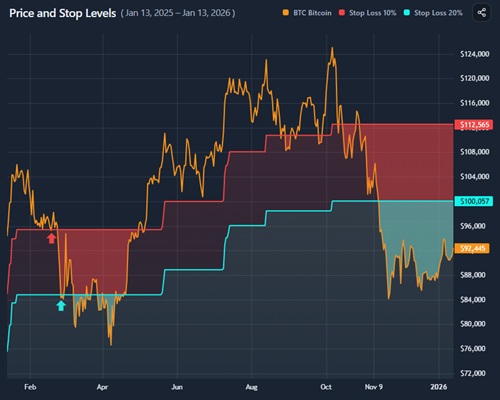
Stop Loss preview

Related Tool

Stop Loss

Use the interactive tool to explore the same concept with your own time range and settings.