In many markets — especially crypto — a small number of days drive a large share of long-term returns.
This phenomenon is known as return concentration. It explains why timing mistakes are so costly, why missing a few days can flip outcomes, and why average returns often hide the true drivers of performance.
What return concentration represents
Return concentration describes how unevenly returns are distributed over time.
Instead of gains being spread evenly:
- most days contribute little
- a handful of extreme days dominate outcomes
- losses are often clustered as well
Performance depends on being present during a small number of critical periods.
Why returns are concentrated
Return concentration arises from structural market dynamics:
- volatility clustering
- leverage and liquidations
- reflexive price moves
- narrative-driven surges
- thin liquidity during stress
Large moves tend to occur in bursts, not gradually.
Best days vs average returns
Average returns assume smooth compounding.
Real markets are not smooth.
Two assets can have the same average return, but:
- one relies on a few extreme days
- the other compounds steadily
The first is far more fragile to timing errors.
Why missing the best days matters so much
Missing a small number of top-performing days can:
- erase years of gains
- turn profits into losses
- dramatically reduce compounding
This is because:
- large positive days carry disproportionate weight
- gains and losses are asymmetric
- recovery math is unforgiving
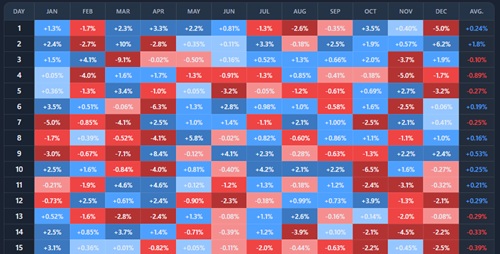
Worst days matter just as much
Return concentration is two-sided.
A small number of worst days often account for:
- most drawdowns
- long recovery periods
- psychological capitulation
Avoiding a few extreme losses can materially improve outcomes — in hindsight.
“Only held” vs “missed” paths
Path-based analysis often compares:
- full participation
- only holding extreme days
- missing extreme days
These comparisons reveal:
- sensitivity to timing
- dependence on volatility
- structural fragility of outcomes
They are diagnostic tools, not strategies.
Return concentration and volatility
Higher volatility increases concentration.
In volatile markets:
- returns become lumpier
- fewer days matter more
- timing risk dominates intuition
This is why volatility drag and return concentration are closely linked.
Common misconceptions
“If I just avoid bad days, I’ll do better”
Incomplete.
Bad days and good days often cluster together.
“Best days are predictable”
False.
Extreme days are usually reactions to unexpected events.
“Long-term investing removes timing risk”
Not entirely.
Timing risk is reduced — not eliminated.
Why this matters for investors
Return concentration explains:
- why market timing is so hard
- why drawdowns feel disproportionate
- why discipline matters more than precision
- why smooth backtests often mislead
Understanding concentration improves expectations, not prediction.
When return concentration analysis is most useful
It is most useful when:
- analyzing timing sensitivity
- comparing strategies
- studying volatility effects
- stress-testing assumptions
- explaining real-world outcomes
When return concentration is misused
It becomes misleading when:
- treated as a trading rule
- reduced to “always stay invested”
- used without volatility context
- ignored in favor of averages
Key takeaway
Returns are not evenly distributed.
- A few days often drive most outcomes
- Missing them can flip results entirely
- Volatility concentrates both risk and reward
- Paths matter more than averages
Understanding return concentration explains why being mostly right is often not enough.
