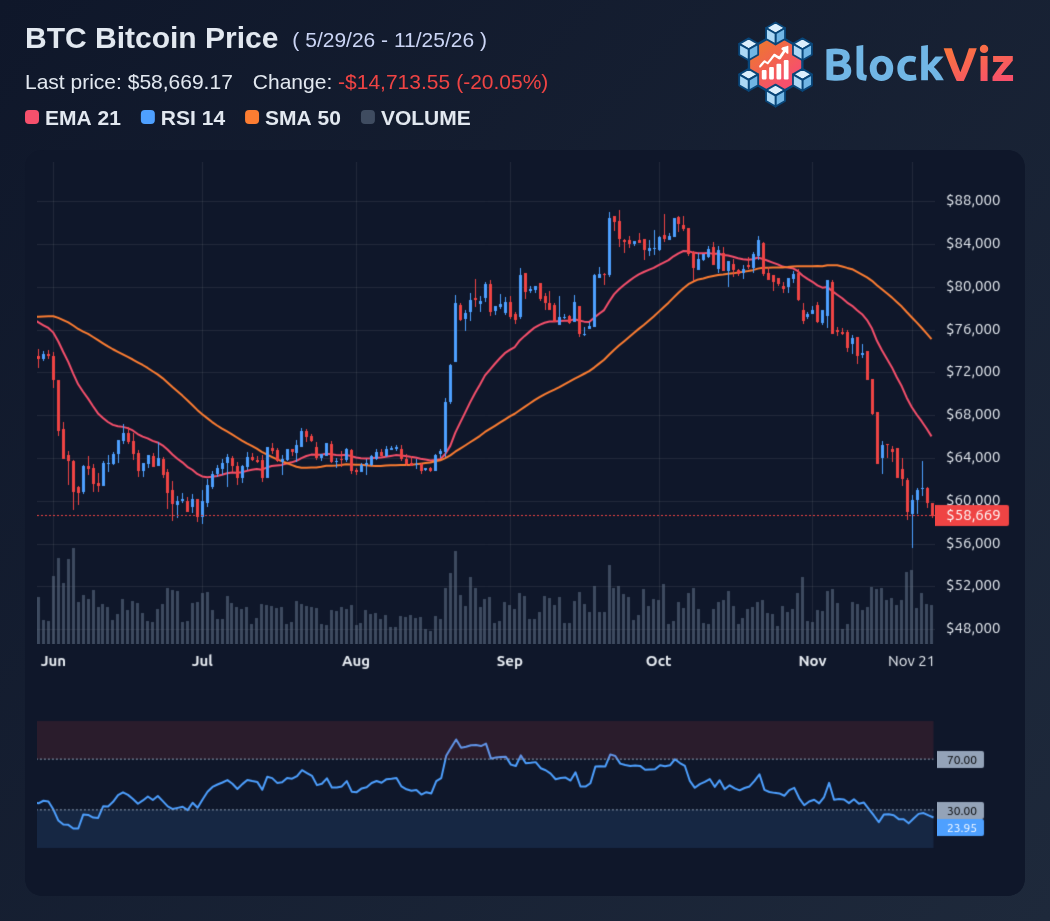

11.6 million BTC underwater is a large number, but calling it worse than FTX confuses unrealized losses with a liquidity crisis. FTX was a solvency and custody failure. Underwater supply is a market-pricing problem, and it only becomes dangerous if holders are forced to sell.
The contradiction is that 58% of supply being underwater can be bearish for sentiment while still leaving the market structurally intact. Many of those coins may belong to long-term holders who do not need liquidity, or to wallets that have not moved in years. Unrealized loss is not the same as realized selling pressure.
PCE matters because it can change the cost of holding risk. A hotter inflation print could push yields higher and make investors less willing to fund high-volatility assets. But PCE does not create Bitcoin supply. It becomes a blow only if it tightens financial conditions enough to trigger more deleveraging or ETF redemptions.
The real risk is overlap. If underwater holders start distributing while ETF outflows continue and macro conditions tighten, the market faces supply from three directions at once. That is when a drawdown can become a liquidity event rather than a normal correction.
The non-obvious insight is that underwater supply is a vulnerability, not a trigger. The trigger is forced selling. Until holders are actually moving coins and buyers are absorbing that supply, the 11.6 million BTC figure is a measure of pain, not proof of collapse.