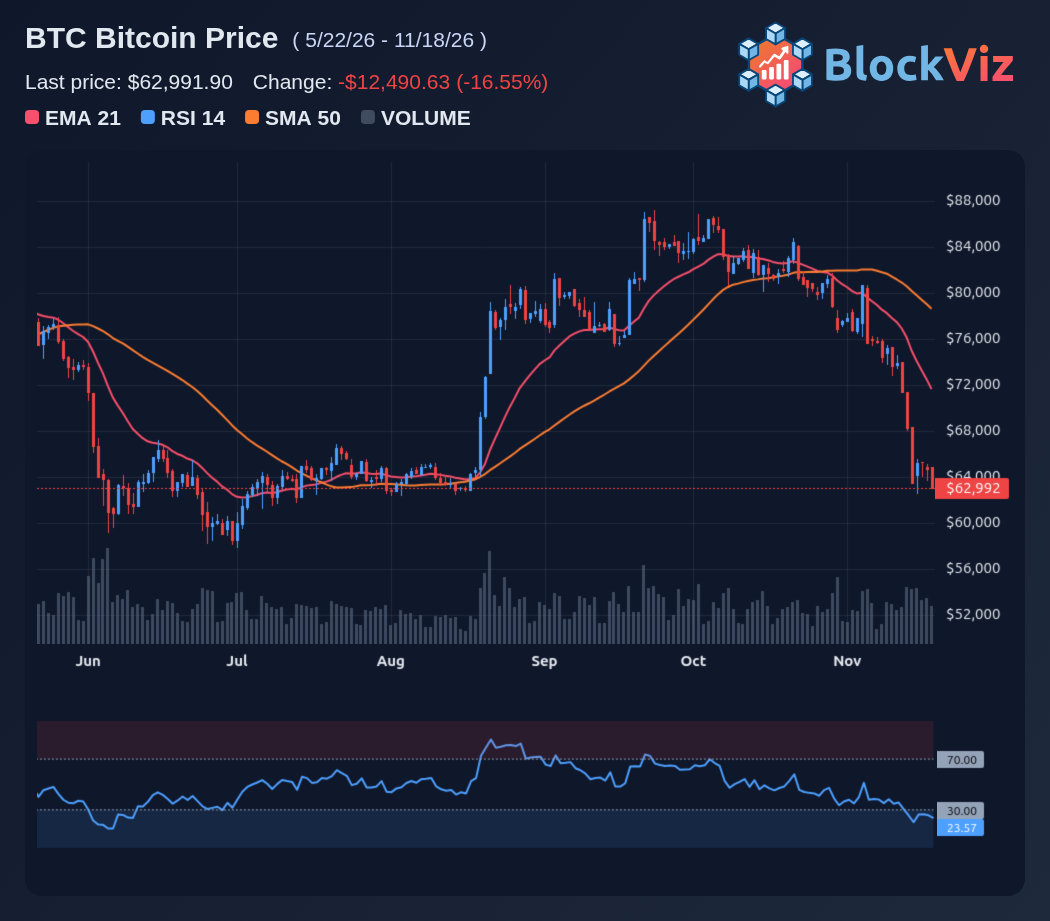
The key risk is not a “shock” hike by itself. It is the market losing confidence in what the Fed will do next.
Bitcoin is already down 22%, but that move does not prove another leg lower is inevitable. The real question is whether the official’s comment represents a genuine change in the Fed’s reaction function, or just a trial balloon.
That distinction matters because markets reprice before policy changes. If traders interpret the remark as evidence that inflation is persisting or that officials are willing to act aggressively, yields and the dollar can rise immediately. Funding and margin pressure then spread across leveraged crypto positions, even without an actual hike.
Bitcoin is not a bond, but it can trade like a long-duration risk asset when liquidity tightens. The market discounts future adoption expectations more aggressively, while leverage turns a repricing into forced selling.
So the 22% decline is not the conclusion. It is evidence that the market is sensitive to policy uncertainty. A further selloff would require the hawkish message to become durable policy, not merely louder rhetoric. The contradiction is that uncertainty itself can keep pressure on BTC, because traders cannot tell whether they are pricing a temporary warning or the start of a new tightening path.