
THORChain just drew a line in the sand over the 387.5 million dollar Bitget hack, and it is splitting the crypto community. The exchange asked the protocol to block wallets tied to the attacker, but THORChain said no, arguing that its emergency halt tools protect the network as a whole and are not meant to freeze individual addresses or swaps. That stance has reignited the oldest debate in crypto: is censorship resistance a feature or a bug when stolen funds are moving through your rails?
The tension is real. Bitget CEO Gracy Chen called out THORChain publicly, saying decentralization is a design principle, not a shield for facilitating known stolen funds. THORChain pushed back, noting it retired its admin key in February 2025 and that its validators lack a switch to blacklist single addresses without compromising the permissionless model. The protocol pointed to its own May 2026 exploit, where it paused the network to contain a 10.7 million dollar loss but did not blacklist the attacker's wallets afterward.
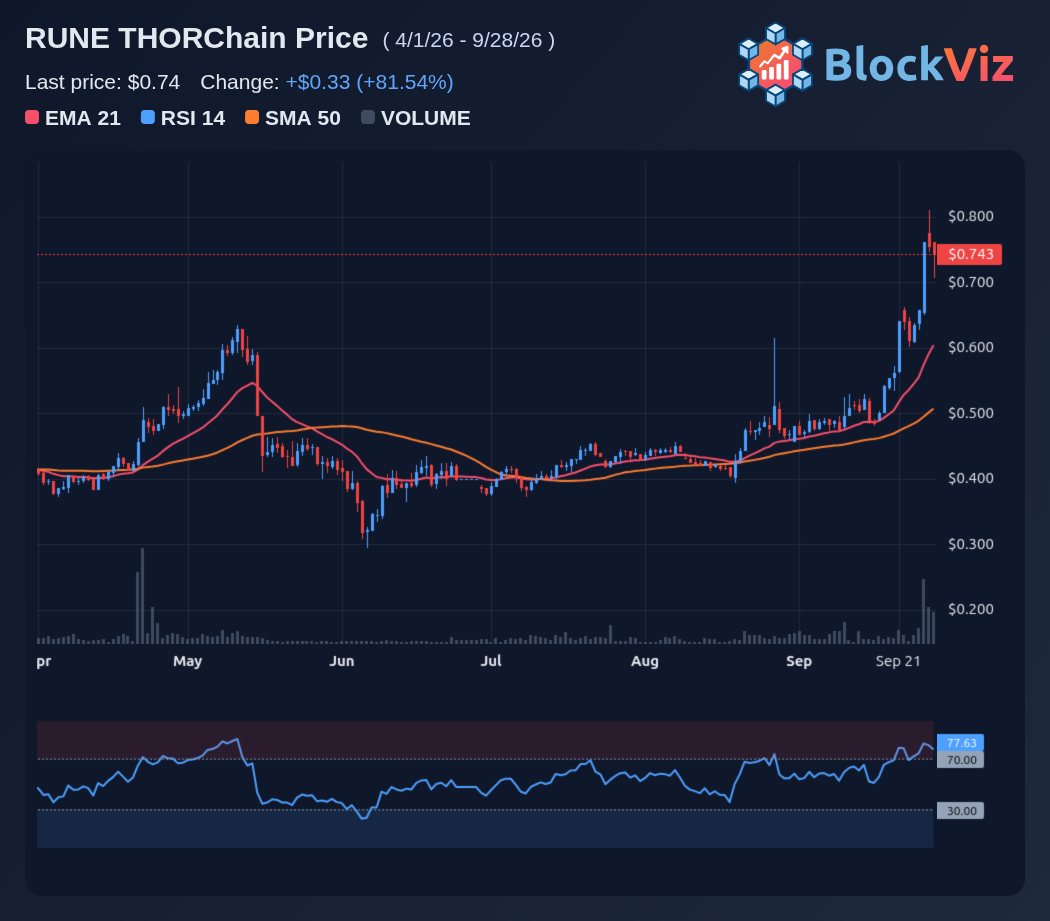
For traders, the setup is about narrative and flow. RUNE is up more than 20% in 24 hours as the market prices in a purity premium for a protocol that refuses to censor, even under pressure. The question is whether that bid holds once the dust settles and whether other DeFi primitives follow the same line. Watch RUNE around its recent breakout levels and monitor whether any node operators vote to pause Bitget-linked flows, which would signal a shift in the governance stance.
The next catalysts are the ongoing on-chain movements of the stolen funds and any further statements from THORChain validators or Bitget. If the protocol holds firm, expect more capital to rotate into censorship-resistant narratives. If validators waver or coordinate a selective pause, the purity trade could reverse fast. The key levels are RUNE's breakout zone and the 387.5 million dollar hacker wallet flow through THORChain's cross-chain swaps.